


Many electrical problems in commercial buildings don’t begin as emergencies. A connection loosens a little at a time. A panel sized for the original tenant ends up carrying equipment nobody planned for. A circuit may begin running warmer than expected without obvious warning signs. By the time a breaker trips or a machine stops, the underlying issue has often been developing for a while.
That’s the case for commercial electrical inspections in Orange County. An inspection can help identify visible or detectable concerns and give you information to plan repairs or maintenance on your own schedule, rather than reacting after something fails.
Want a clearer picture of your building’s electrical condition? Request a free consultation to discuss an inspection for your property.
What a Commercial Electrical Inspection Typically Looks At
Commercial electrical inspections can vary depending on the building, its electrical systems, and the purpose of the assessment. Depending on the inspection’s scope, an electrician may evaluate areas such as:
- Panels and switchgear: Signs of overheating, corrosion, physical damage, or missing covers
- Breakers and labeling: Visible damage, unclear circuit labels, and concerns that may call for additional testing
- Connections and terminations: Accessible connections showing discoloration, wear, or looseness
- Load versus capacity: Whether equipment added over the years is placing more demand on circuits than they were designed for
- Grounding: Visible grounding and bonding connections
- Lighting: Interior, exterior, and security lighting that isn’t performing as it should
Not every inspection includes the same procedures. A small office and a manufacturing floor have very different equipment, so it helps to discuss your property and goals before the inspection is scheduled.
Where Infrared Testing Fits In
Electrical components produce heat when they carry current. When a connection deteriorates or a circuit is overloaded, that spot may run hotter than the components around it.
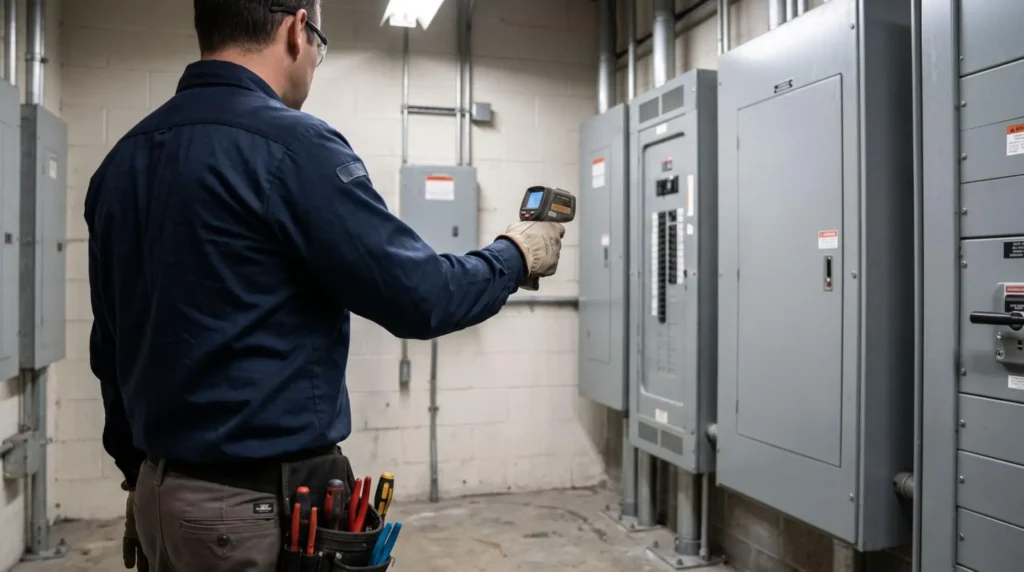
JEC lists infrared thermometer testing among its commercial electrical services. Infrared testing can help identify unusual temperature patterns that may indicate overloaded components, deteriorating connections, or other conditions that need further investigation.
It’s a useful tool, but it has limits:
- Equipment generally needs to be running under a normal load for temperature differences to show up.
- Not every electrical fault produces detectable heat.
- An infrared reading shows where something may be wrong, not necessarily why. Confirming the cause takes further investigation.
- Temperature readings are only one part of assessing an electrical system, so they should be considered alongside other appropriate inspection findings.
Because this kind of testing involves energized equipment, it should only be performed by qualified electricians.
When an Inspection Makes Sense
There’s no single schedule that fits every building, but an inspection may be worth considering when:
- You’re buying, leasing, or taking over management of a property
- New equipment has been added since the electrical system was last reviewed
- Breakers trip repeatedly or certain areas have recurring problems
- The building is older and its electrical history is unclear
- A remodel or industrial electrical upgrade is being planned
Properties with heavy or continuous electrical loads, such as warehouses, factories, and restaurants, often have more equipment to keep an eye on. In those settings, a developing problem in one panel can affect production lines, refrigeration, or other equipment the business depends on, which makes early information especially useful.
What Happens After the Inspection
Findings are most useful when they lead to a plan.Depending on the findings, certain electrical concerns may require prompt attention, while others may be suitable for planned maintenance or continued monitoring. Sorting them this way helps owners and property managers budget and schedule work with less disruption to daily operations.
When repairs are needed, JEC’s repair services follow the same steps we use on every job: assess, plan, perform the work, and test the results. It’s also worth being realistic. An inspection can’t uncover every hidden fault or guarantee that equipment won’t fail. What it can do is give you better information for making decisions.
Frequently Asked Questions: Commercial Electrical Inspections
Q: Can infrared testing find every electrical problem? No. Infrared testing can help identify unusual heat, but some faults don’t produce detectable temperature changes. It works best as one part of a broader inspection.
Q: Will an inspection require shutting off power? It depends. Infrared testing is done while equipment is running, while other checks may require de-energizing certain equipment. Any potential interruptions should be discussed and scheduled ahead of time.
Q: How often should a commercial property be inspected? It varies with the building’s age, how it’s used, and how heavily its electrical system is loaded. An electrician can help you settle on a reasonable schedule for your property.
Q: Is this the same as a city permit inspection? No. A permit inspection is conducted by the local building department to review permitted work. A maintenance-focused electrical inspection is arranged by the property owner to assess the condition of the existing system.
Plan Your Next Electrical Repair Instead of Reacting to It
An electrical inspection cannot eliminate every unexpected problem, but it can help identify concerns early and support more informed maintenance planning. That information is useful for owners and managers responsible for keeping a business running.
To schedule an inspection or ask questions about your property, call JEC at (714) 993-6875. You can also learn more about our team and how we approach commercial work.
