


“I already have power strips on the TV and the computer. Isn’t that enough?”
It’s a reasonable question, especially when many homeowners already use plug-in surge protectors for their electronics. Plug-in surge protectors do a useful job for the devices connected to them. But a modern home has electronics in plenty of places that never touch a power strip: the control board in your refrigerator, the air conditioning system, the washer and dryer, the garage door opener, and the range. That’s where whole-house surge protection in Orange County homes comes into the conversation.
Wondering whether your home has any surge protection at all? Request a free consultation and a JEC electrician can look at your panel and talk through your options.
What a Power Surge Actually Is
A surge is a brief spike in voltage, often lasting only a fraction of a second. Some surges come from outside the home, such as utility switching, problems on the grid, or nearby lightning. Others start inside the house when large motor-driven appliances, like an AC compressor or refrigerator, cycle on and off.
Not every surge causes obvious damage. A large one may knock out a device right away, while smaller, repeated events may contribute to wear on sensitive electronics over time.
Electrical disturbances can happen throughout the year. Not every outage or change in power conditions causes a damaging surge, but it is worth understanding what protection your home already has.
Whole-House Protection vs. Plug-In Protectors
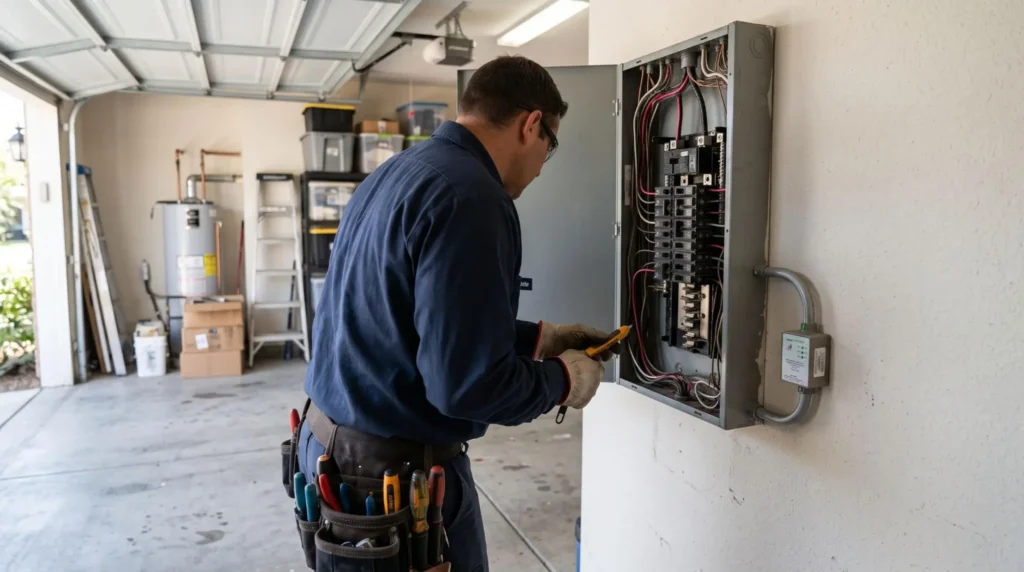
A whole-house surge protective device is typically installed at or near your main electrical panel. It’s designed to limit transient overvoltages entering through your electrical service before they travel through the home’s circuits.
Plug-in, or point-of-use, protectors work at the outlet. They’re designed to help protect the specific devices plugged into them, which makes them a good fit for TVs, computers, gaming systems, and home theater equipment.
The two work best together. A whole-house device can help reduce surges coming in from the utility side, while point-of-use protectors add a layer for sensitive electronics and smaller surges generated inside the home. Neither eliminates every risk, and neither will keep your lights on during an outage.
What Affects How Well Surge Protection Performs
A surge protector is only one piece of the system. A few factors make a real difference:
- Grounding and bonding: Surge protection devices rely on a proper path to ground. If a home’s grounding is outdated or damaged, the device may not perform as intended.
- The right device in the right place: The protector needs to suit your electrical service and be installed correctly at the panel.
- Panel condition: An older or crowded panel may need attention before new equipment is added.
- Device wear: Surge protectors can degrade as they absorb surges. Many include an indicator light, and it’s worth having them checked after a major electrical event.
Looking at the existing system first helps determine what will actually work in your home.
When It Makes Sense to Talk to an Electrician
You might consider a professional assessment if:
- You’ve replaced electronics or appliance control boards without a clear explanation
- You’re adding a home theater, smart home system, or EV charger
- You’re planning a panel upgrade or other major electrical work
- You live in an older home and aren’t sure how it’s grounded
One note: flickering lights on their own aren’t proof that you need surge protection. Flickering can point to loose connections, overloaded circuits, or other issues that should be investigated directly. JEC’s residential electrical services include troubleshooting as well as surge protection, so both concerns can be checked together.
How JEC Approaches Surge Protection
JEC is a family-owned electrical contractor that has served Orange County since 1981. Our process starts before anything gets installed.JEC’s approach begins with understanding your electrical needs and assessing the existing system. From there, our electricians can discuss suitable surge protection options and plan the installation based on your home’s requirements. Following installation, the completed work is tested as part of our standard process.
Our technicians receive ongoing training on electrical codes and service methods, and we’re fully licensed, bonded, and insured. You can learn more about JEC and the way we work.
Frequently Asked Questions: Surge Protection in Orange County
Q: Does whole-house surge protection prevent all electrical damage? No. Surge protection devices are designed to limit certain voltage spikes and may help reduce the risk of damage, but they can’t eliminate every electrical risk. A direct lightning strike, for example, can exceed what a device is built to handle.
Q: Do I still need plug-in surge protectors if I have whole-house protection? For sensitive or expensive electronics, a layered approach is often recommended. The whole-house device works at the panel, while point-of-use protectors add protection right at the device.
Q: Can I install a whole-house surge protector myself? Installation involves working inside the electrical panel, which carries a serious risk of shock and injury. This work should be handled by a licensed electrician.
Q: Is surge protection required by code? Requirements depend on the electrical code adopted locally and the type of work being performed. A licensed electrician can help determine whether surge protection is required for your project.
Protect More Than What’s Plugged Into a Power Strip
The electronics in your home have quietly multiplied, and many aren’t on a surge strip. A short assessment can show where your home stands and whether whole-house protection makes sense.
Call JEC at (714) 993-6875 or submit a service request to schedule your free consultation.
